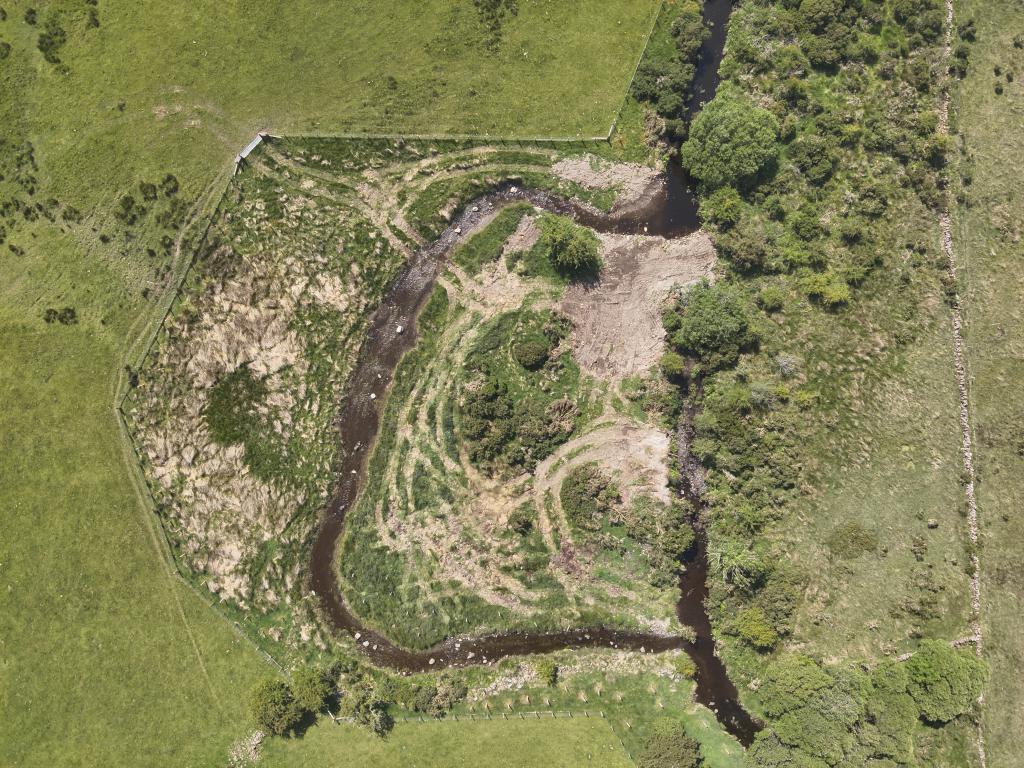
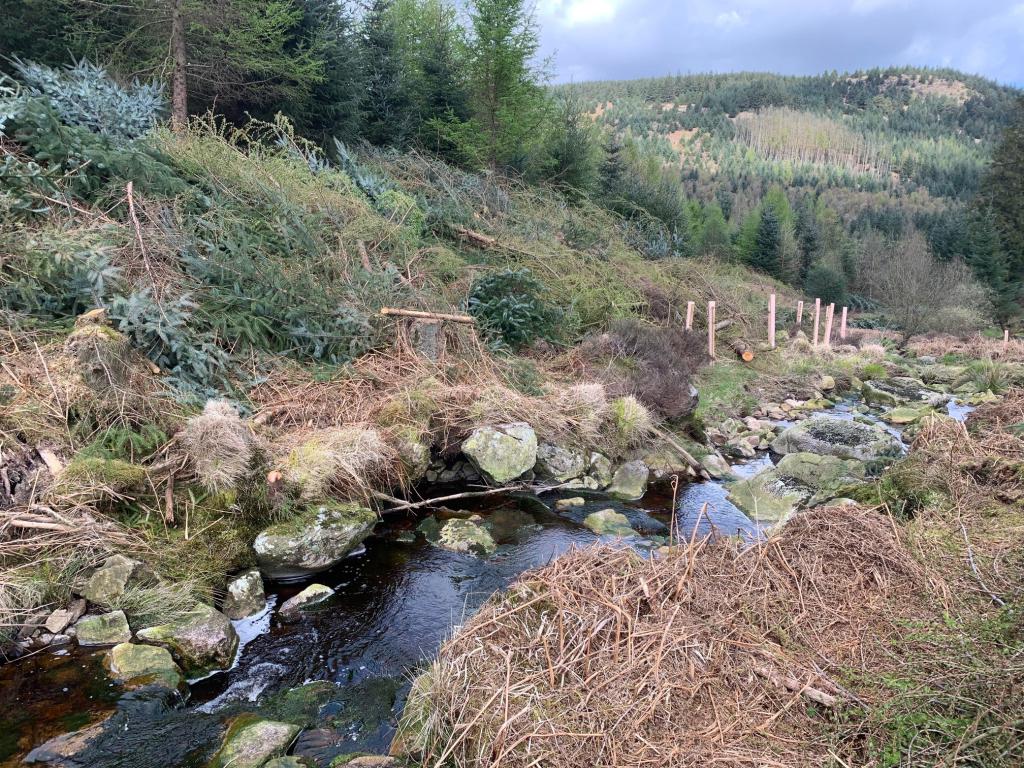
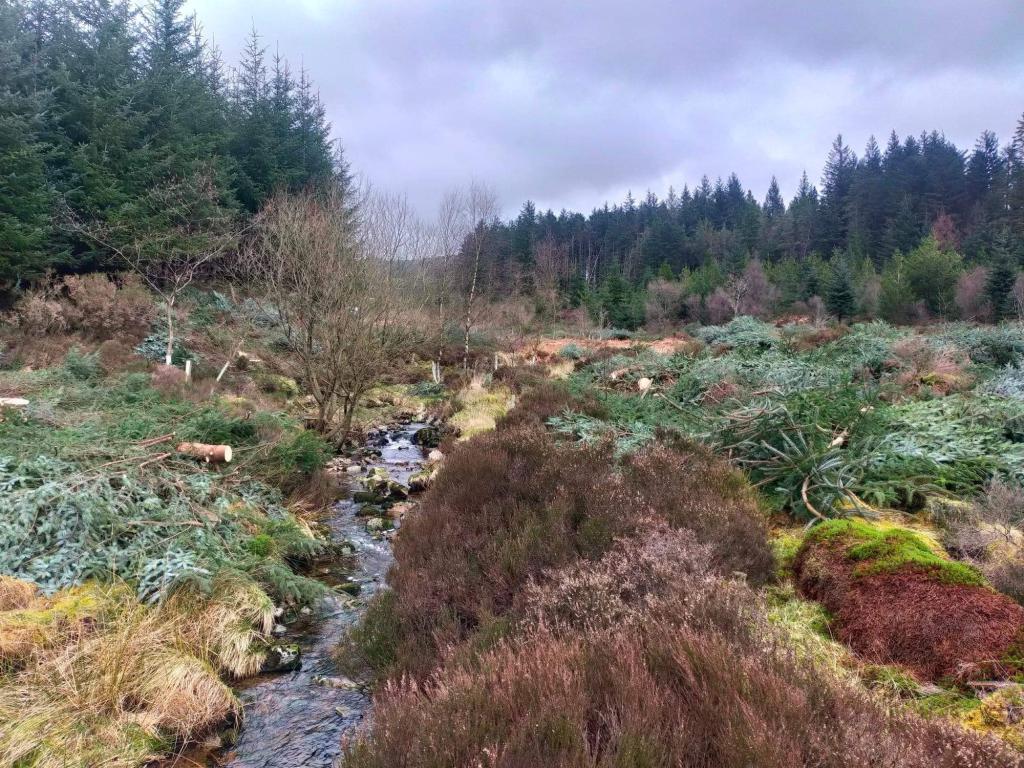
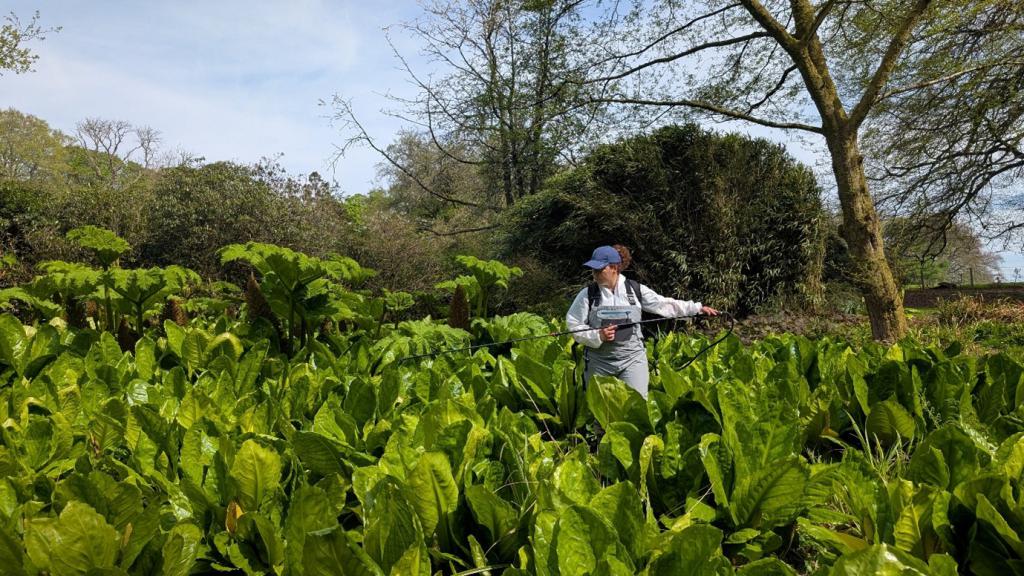
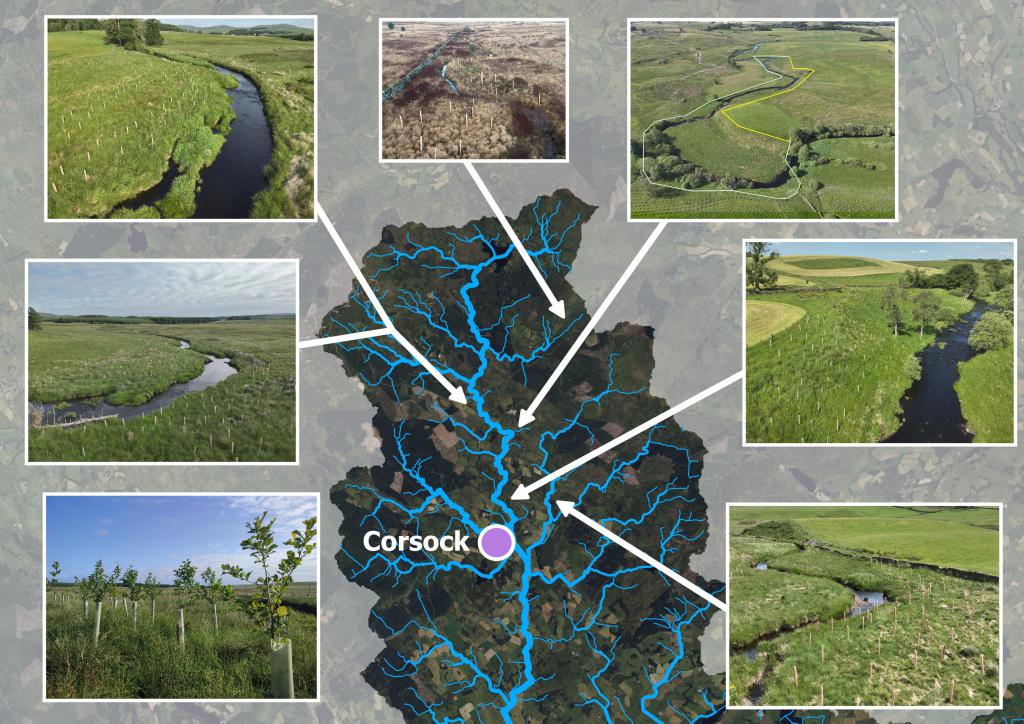
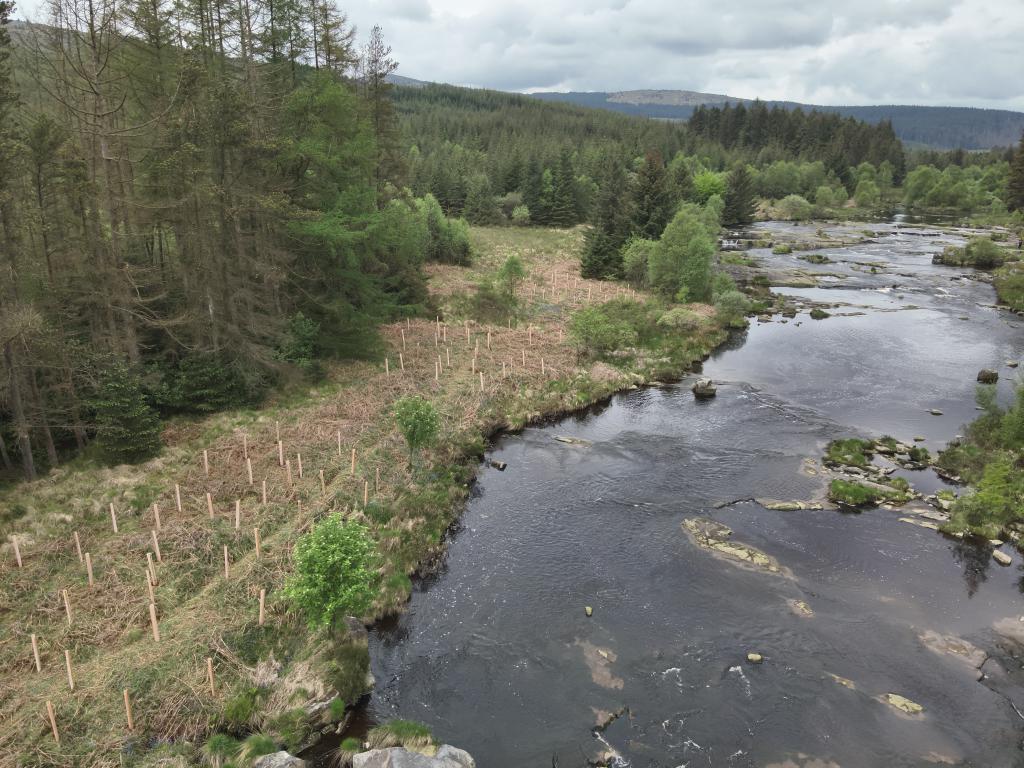
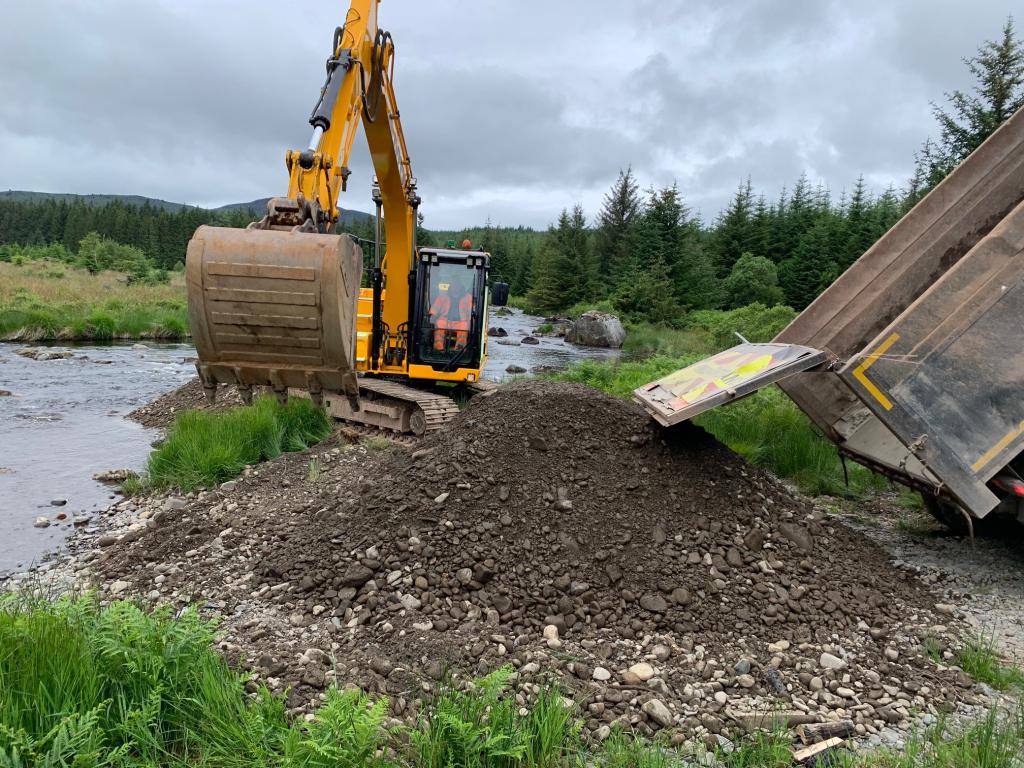
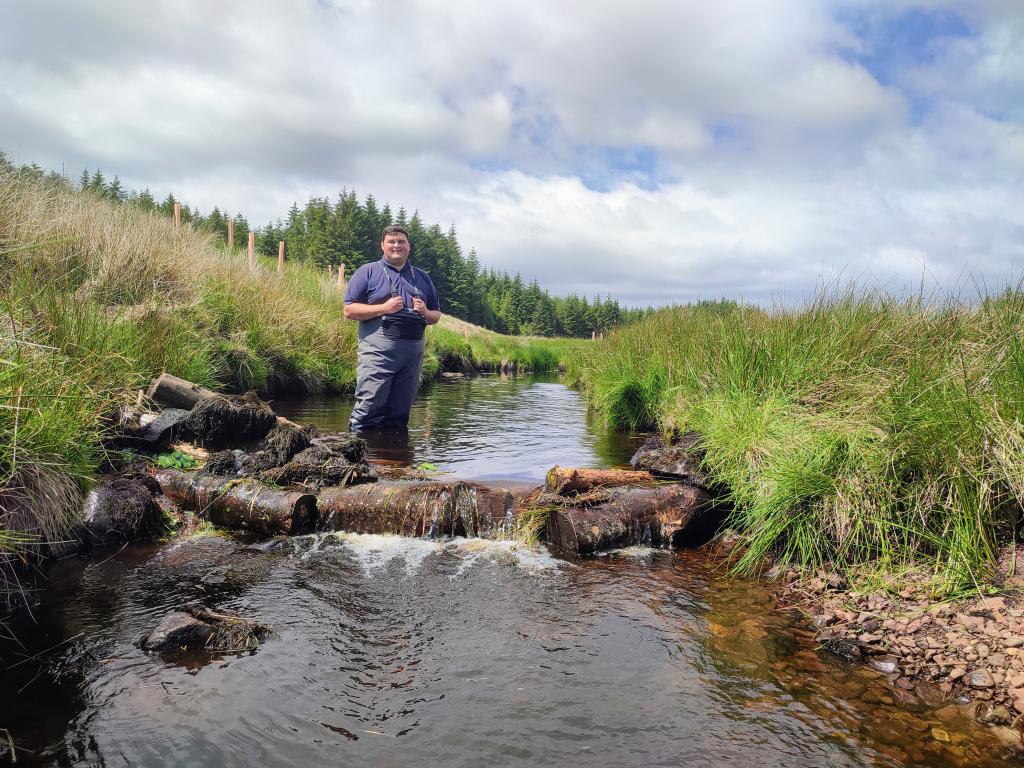
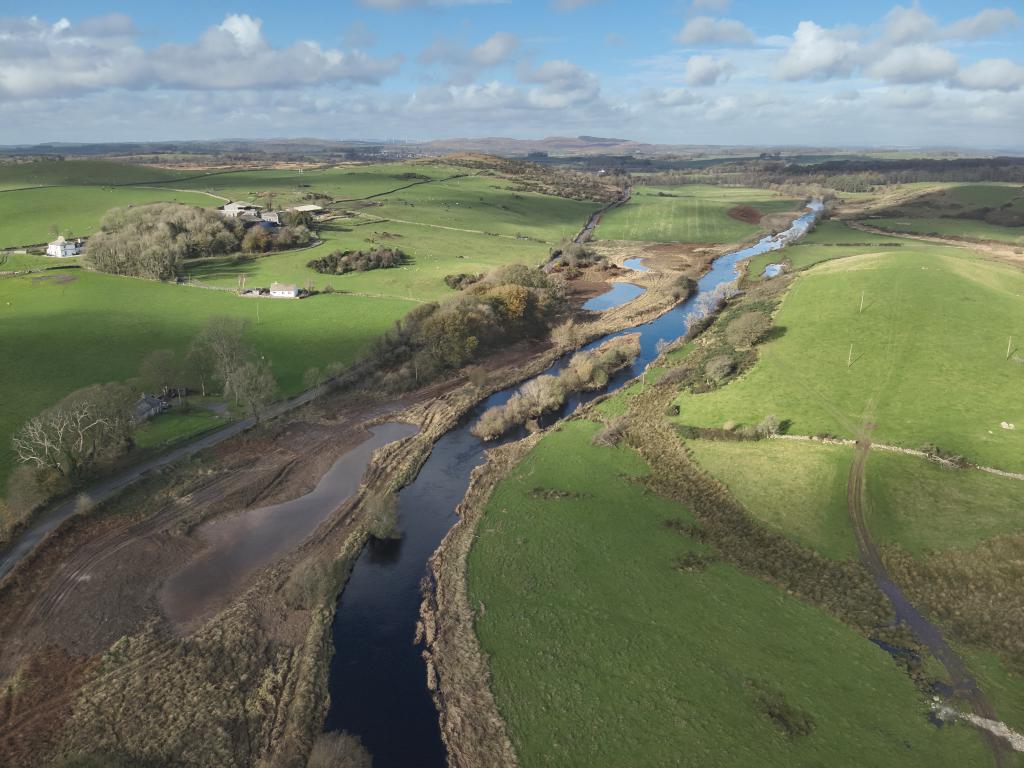
The GRT 'Flowing Forward - Restoring Galloway's Rivers' programme is working to improve freshwater and riparian environments across seven local river catchments (Luce, Bladnoch, Cree, Water of Fleet, Kirkcudbrightshire Dee, Urr and Annan) in partnership with various stakeholders, organisations and local communities.
The objectives of this ambitious programme are to:
We have three full time posts delivering this project - a Habitats and Climate Resilience Officer, Project Manager (Nature Restoration) and an Ecologist. The project has the expertise, skills, contacts and staff to identify and deliver a wide range of restoration works. We work closely with various partners to provide wider specialised expertise, where required, we bring in specialism to produce detailed designs to accurately cost projects and minimise risk.
In early 2026, 'Flowing Forward - Restoring Galloway's Rivers' and the SCAMP Landscape Connections were chosen by NatureScot to be one of nine landscape scale nature restoration exemplars in Scotland. Working together these projects are a true opportunity of 'source to sea' catchment scale restoration. Exemplars are to be prioritised for support by various agencies with the aim to accelerate and scale up nature restoration in these areas. We are delighted to have been recognised in this process and look forward to working with the agencies and SCAMP (who we are a delivery partner of) to scale up the programme of restoration across Galloways catchments and coasts. The project is important to connect and link important habitats together for the benefit of many species.
Ensuring the work programmes are 'evidence based' means the correct sites are selected and the most appropriate restoration techniques are put into place. GRT wider data collection work (including electrofishing fish surveys, water quality monitoring, invertebrate surveys, water temperature monitoring, habitat surveys & drone surveys) are undertaken to collect the 'evidence' we need to identify where restoration work is needed and to monitor the environmental benefits from the work completed.
The project outputs aim to support the objectives of various plans and initiatives including The Scottish Wild Salmon Strategy, Solway and Tweed River Basin Management Plan, Dumfries and Galloway Local Biodiversity Action Plan, Scottish Invasive Non-Native Species Plan Action Plan 2026-2032, Scottish Biodiversity Strategy to 2045 and the various local Salmon Fishery Management Plans.
The 'Flowing Forward - Restoring Galloway's Rivers' umbrella programme is delivered through various GRT sub-programmes including:
We work closely with many stakeholders, landowners and organisations when delivering the work programme including SEPA, NatureScot, Dumfries & Galloway Council, DRAX, Forestry and Land Scotland (FLS), Crichton Carbon Centre, Kirkcowan Angling Club, local District Salmon Fishery Boards (covering Luce, Bladnoch, Water of Fleet, Kirkcudbrightshire Dee, River Urr, Annan), Upper Urr Environment Trust and Riverwoods.
Project delivery is supported by many generous funders including NatureScot (Nature Restoration Fund), SPEN, The Wild Fisheries Fund, The National Lottery Heritage Fund, Glenkens & District Trust, Riverwoods, Morgan Sindall Construction, The Swire Charitable Trust, South of Scotland Enterprise (SOSE) and William Grant Foundation.
In spring 2026, Galloway Rivers Trust undertook 22.5 hectares of peatland restoration around Loch Moan in Dumfries and Galloway. Loch Moan is the source of the River Cree, which is an important river in Galloway for its freshwater fish populations including the very rare Sparling.
The River Luce starts in the hills of southern Ayrshire and makes it way down through New Luce and Glenluce before joining the Solway Firth. Throughout its length it acts as a home to a large variety of aquatic species such as salmon and trout, as well as many invertebrate species.
Galloway River Trust has secured funding from the European Open Rivers Programme for work to remove the Broom Caul. As part of our work to restore the river habitats of the River Annan catchment, the removal of this caul, or weir, has been identified as a priority action.