Restoring local peatlands
2nd Oct 2026
by Jamie Ribbens
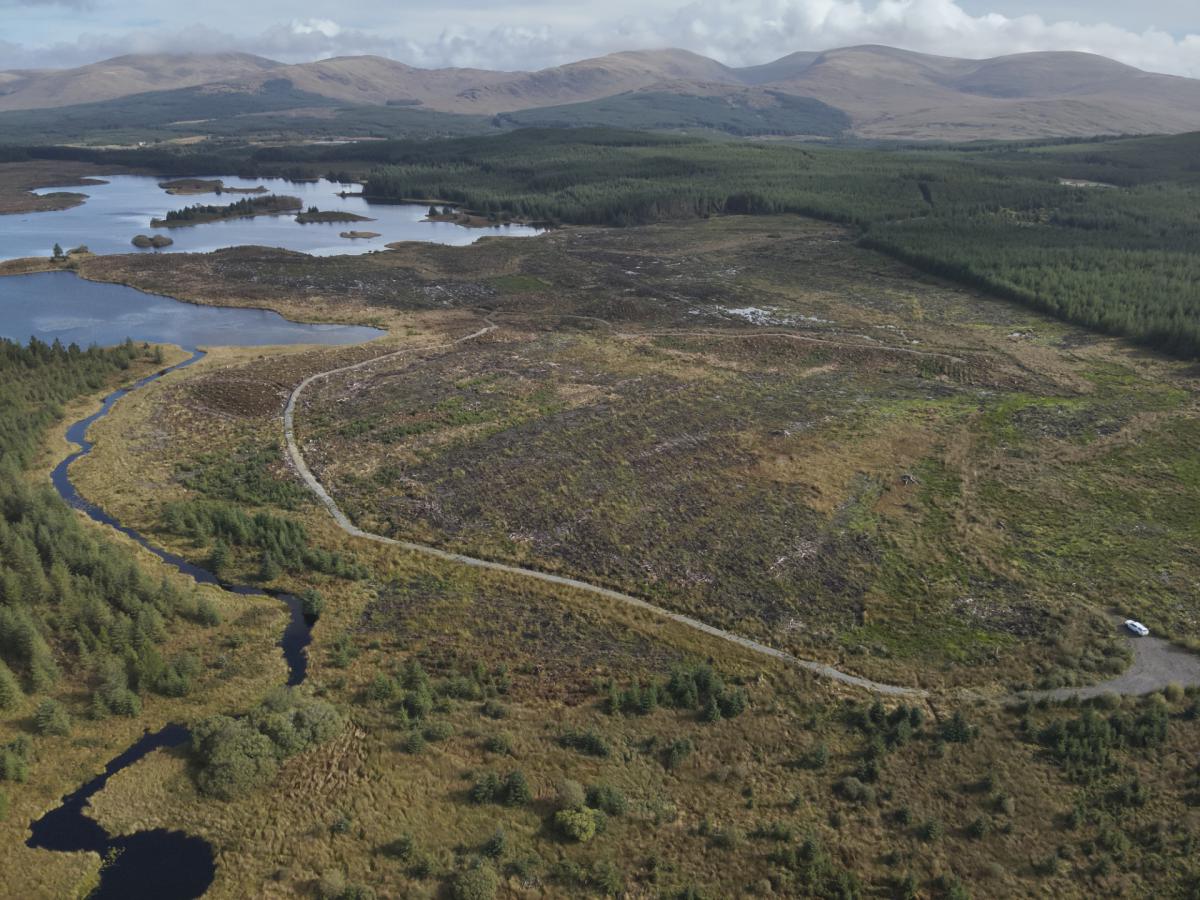
In spring 2026, Galloway Rivers Trust undertook 22.5 hectares of peatland restoration around Loch Moan in Dumfries and Galloway. Loch Moan is the source of the River Cree, which is an important river in Galloway for its freshwater fish populations including the very rare Sparling.
Dumfries and Galloway holds 20% of all of Scotland’s peat, a type of organic soil made up of decaying matter which accumulates incredibly slowly at a rate of 1mm per year (1000 years per metre of peat) and is the world’s best natural carbon store. A healthy peatland is very wet and the waterlogged nature prevents the decay of the accumulated plant matter which holds the carbon in for the thousands of years that the peat develops over. The slow anaerobic decay, carbon storage, and the bog-loving plants mean that peat is naturally acidic. Cutting, draining, and digging out the peat releases this stored carbon into the atmosphere and the acidic water draining out leaches into surrounding watercourses and landscapes which has significant negative impacts. Historically, peatlands were drained to allow for additional agricultural opportunities and the peat itself was cut and burned as a fuel source. Peatlands have also been drained for old-style commercial conifer plantations as trees struggle to grow in the persistent wet conditions. These practices have resulted in peatlands becoming one of the most threatened habitat types in the UK.
GRT water quality research has shown that the headwaters of the River Cree around Loch Moan are very acidified. Acidification is a major problem in some of Galloway's upper catchments and is directly related to the degraded peatlands. The acidic water leaching into nearby watercourses reduces the pH to lethal levels for fish. In acidified waters, protected species such Atlantic salmon and Brown trout cannot reproduce successfully as the low pH prevents an egg-hatching enzyme from being released. Fish may attempt to spawn but the eggs are essentially glued shut. Fish also experience negative health impacts and mortality from prolonged acidification which can drive them away from watercourses with persistent low pH. This has led to the loss of Atlantic salmon within some of the most impacted areas, including the upper headwaters of the River Cree. Peatland restoration is becoming one of the most important practices for reducing the impacts of acidified waters on sensitive fish populations, as well as for improving aquatic and terrestrial ecosystems as a whole.
In February and March 2026, GRT undertook 22.5 hectacre of forest-to-bog peatland restoration around Loch Moan. Forest-to-bog restoration specifically targets areas that were previously commercial conifer plantations and are no longer being used for planting trees. To plant trees, peatlands are dug out in ridge and furrow patterns, the furrows help drain the ground and the ridges provide higher and drier ground for growing trees. Additional drains are dug out to reduce the water table and dry the ground and they also allow the site to flush any extra water out during wet weather. During the restoration of Loch Moan, the majority of works involved flipping the previously felled tree stumps from the ridges and burying them into the furrows then smoothing it all over to flatten the site back to a more natural state. The works also involved blocking drains with peat dams which holds water back and stops any flow of water through the site. These practices together are called ground-smoothing, and return the site back to a flat and wet area which supports the recovery of peat and the return of natural bog species. As an additional restoration effort, leftover brash piles on site were constructed into hibernacula which will provide areas of refuge for any reptiles and small mammals living on the site.
This site had some rich pockets of sphagnum moss, a key indicator species of a healthy bog, which were left alone to allow them to support site recovery by providing a good storage of sphagnum to repopulate. If the site stays wet enough, this sphagnum should spread over several years and return the bog to a healthy carbon store. Peatland restoration takes upwards of 30 years but recovery is gradual and small, subtle changes should be observed annually. GRT will monitor and maintain this site for many years, with visual surveys and conifer regen control and any other maintenance works that may arise.
This project involved partnerships with Forestry and Land Scotland and Crichton Carbon Centre. A local contractor (Iain Russell) was hired to support a local business and train a reliable operator for future projects. The project was funded by SP Energy Networks as part of their Action for Nature plan.
Latest News
Luce Riverwoods Project
The River Luce starts in the hills of southern Ayrshire and makes it way down through New Luce and Glenluce before joining the Solway Firth. Throughout its length it acts as a home to a large variety of aquatic species such as salmon and trout, as well as many invertebrate species.
Removing Broom Caul
Galloway River Trust has secured funding from the European Open Rivers Programme for work to remove the Broom Caul. As part of our work to restore the river habitats of the River Annan catchment, the removal of this caul, or weir, has been identified as a priority action.
GFT 6 month internship available
A paid internship is available from July to December 2026 (26 weeks) to work with Galloway Fisheries Trust supporting various work programmes.