We are delighted to be a key partner in the Solway Coast and Marine Project – Landscape Connections (SCAMP) which is supported by the National Lottery Heritage Fund. This ambitious coastal and marine nature restoration project will work over 10 years to restore the coastal and shallow sea habitats of the Solway, covering the entire coastline of the Dumfries and Galloway Coastline from Gretna to the Rhins of Galloway.
SCAMP will be exploring community-driven initiatives to enhance and restore nature, supporting coastal/marine habitats and communities to adapt to the effects of climate change, whilst providing sustainable economic and social benefit. The SCAMP website can be found here: www.solwaycoastmarine.co.uk/
Five key habitats will be restored:
The project is being delivered by Dumfries and Galloway Council Environment Team with seven NGO partners (Solway Firth Partnership, Galloway Rivers Trust, D&G Woodlands, GSA Biosphere, RSPB, Southern Uplands Partnership & Crichton Carbon Centre).
SCAMP is now embarking on a two year development phase (until early 2027) to work up and fund the various project ideas.
GRT are working up three main projects as detailed below:
1. Controlling Invasive Non-Native Plant Species
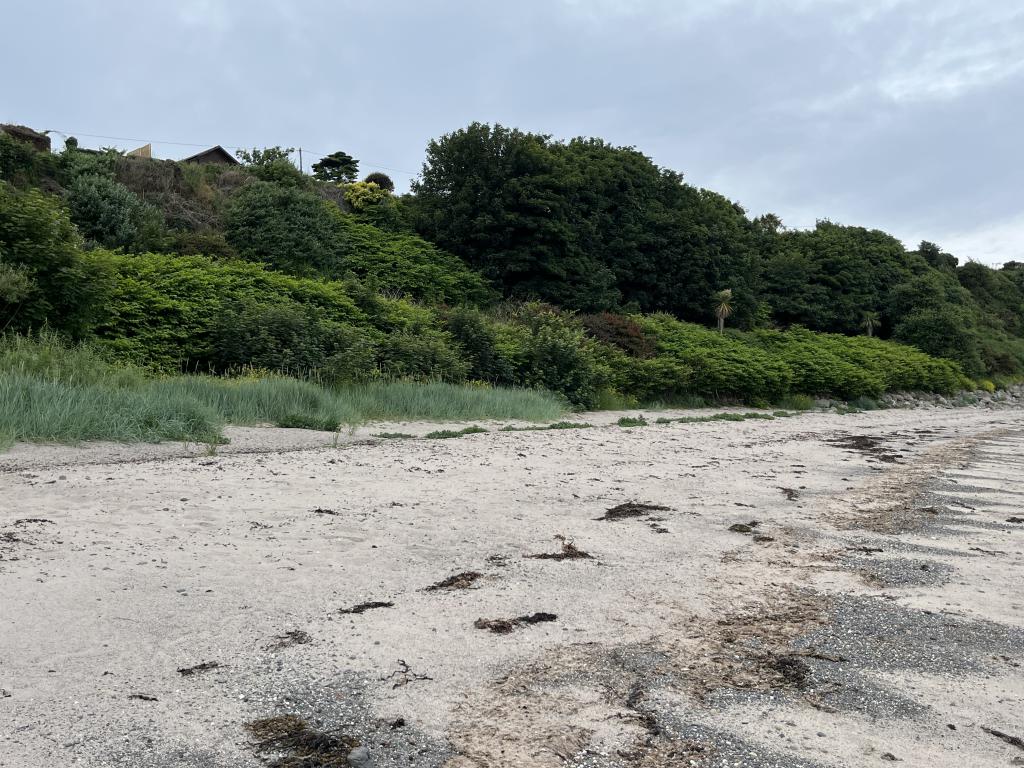
Important sensitive habitats including saltmarsh, sand dunes and coastal woodlands are directly threatened by the presence of some invasive non-native plant species (INNS). These invasive plants can multiply rapidly outcompeting and replacing native plant species. Losing the native vegetation can cause various economic, ecological and biodiversity impacts. Native vegetation often plays a key role in strengthening and protecting habitats throughout the year from the erosive damage of tides, winds and rain. Many INNS plants die back in the winter leaving the underlying soils and sands exposed and unprotected. There is an integral relationship between many native species which dependent on each for their survival e.g. the loss of native vegetation would impact on many specialised insects living around our coasts.
During the development phase of SCAMP, GRT will be working with local communities and landowners to identify, quantify and map the presence of key INNS plant species. This information will be used to develop an effective INNS control programme for delivery over the following 8 years. GRT, local stakeholders and communities will work together to eradicate the INNS and restore back native species. Continued surveying will ensure new INNS populations can be quickly identified and controlled before they become established will also be essential in the longer term.
Key INNS species include Japanese knotweed, Giant hogweed, Himalayan balsam, American skunk cabbage and Giant rhubarb (Gunnera species).
2. Restoring Coastal Burns
Coastal burns provide important habitat for a range of freshwater and migratory fish species such as lamprey and eels. These burns contribute to the wider health of coastal fish populations and the connectivity between freshwater and marine ecosystems. They support wider biodiversity by providing important habitat corridors for wildlife, often in landscapes of intensive land use.
Coastal burns transport nutrients, sediments and organic matter from land to sea which supports coastal ecosystems, including estuaries, saltmarshes and intertidal zones. Healthy coastal burns contribute to the ecological functioning of the wider coastal environment.
Coastal burns form a critical link between upland, freshwater and marine environments, supporting biodiversity, water quality and ecosystem health along the coast. These small watercourses flow directly into the sea, playing a vital ecological and hydrological role along Scotland’s coasts. They can have significant conservation value when well managed and functioning naturally but many coastal burns are in poor condition. Problems include historical dredging and straightening, overgrazed riparian zones, a lack of bankside trees and poor water quality.
The Stanctuary Project in Stranraer is delivering environmental restoration and rewilding around the Black Stank Burn, a coastal burn which flows around the town. This SCAMP project is being managed by GRT, DG Council and SEPA and delivered by various contractors.
During the development phase of SCAMP, GRT will be working with landowners to identify a selection of coastal burns which would be suitable for ecological and hydrological restoration. We will be compiling detailed costed designs to restore habitats and return a more naturally functioning system. These burns will then be restored during the delivery phase of SCAMP.
3. Coastal Fish
We have some project work focused on native fish populations that reside in many of the key habitats. Monitoring the biodiversity of the coastal habitats, including their fish life, is important.
A paid internship is available from October 2025 for 6 months to work with Galloway Fisheries Trust on our River Annan Restoration Project.
Thanks to funding from the Scottish Government's Nature Restoration Fund managed by NatureScot, GFT has been working over the past year to design four exciting new restoration sites across the South West of Scotland.
Freshwater invertebrates are relatively common within rivers and burns. They include groups such as insects, molluscs (snails), crustaceans (shrimps) and annelids (worms), amongst others.
GFT_MBP_9895.jpg)
GFT_MBP_9899.jpg)